Digital Research's GEM opens a new window on Linux
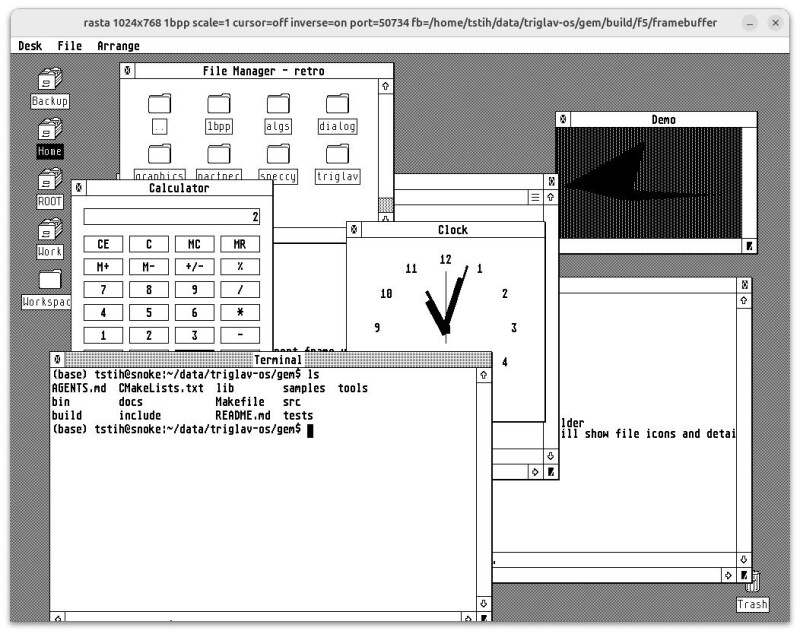
A radical new way to resolve the Gordian knot of X11 versus Wayland
The announcement that Digital Research's GEM is being opened up on Linux is a significant development in the world of operating systems. GEM, or Graphics Environment Manager, was originally developed in the 1980s and was known for its intuitive and user-friendly interface. By bringing GEM to Linux, Digital Research is providing a new alternative to the traditional X11 and Wayland windowing systems, which have been the subject of much debate and discussion in the Linux community.
This move matters because it has the potential to shake up the status quo in the Linux world and provide a new option for users who are looking for a more streamlined and efficient windowing system. The X11 versus Wayland debate has been ongoing for years, with each side having its own strengths and weaknesses. GEM's entry into the market could provide a fresh perspective and a new set of features that could appeal to users who are looking for something different. As a result, this development is likely to be closely watched by the Linux community and could potentially have a significant impact on the future of the operating system.
As this story continues to unfold, it will be interesting to see how GEM is received by the Linux community and how it compares to X11 and Wayland in terms of performance, stability, and features. It will also be worth watching to see how Digital Research supports and develops GEM going forward, and whether it is able to gain significant traction in the market. Additionally, it will be important to see how GEM's arrival affects the broader Linux ecosystem, including the various distributions and software applications that rely on X11 and Wayland.
Originally reported by theregister.com. URLNews adds analysis for ai & agent economy readers.